 Tree Service Erie PA crew
Catching a problem early can mean the difference between pruning a tree and removing it, or between a planned removal and an emergency.
Here are seven signs worth paying attention to.
The 7 signs
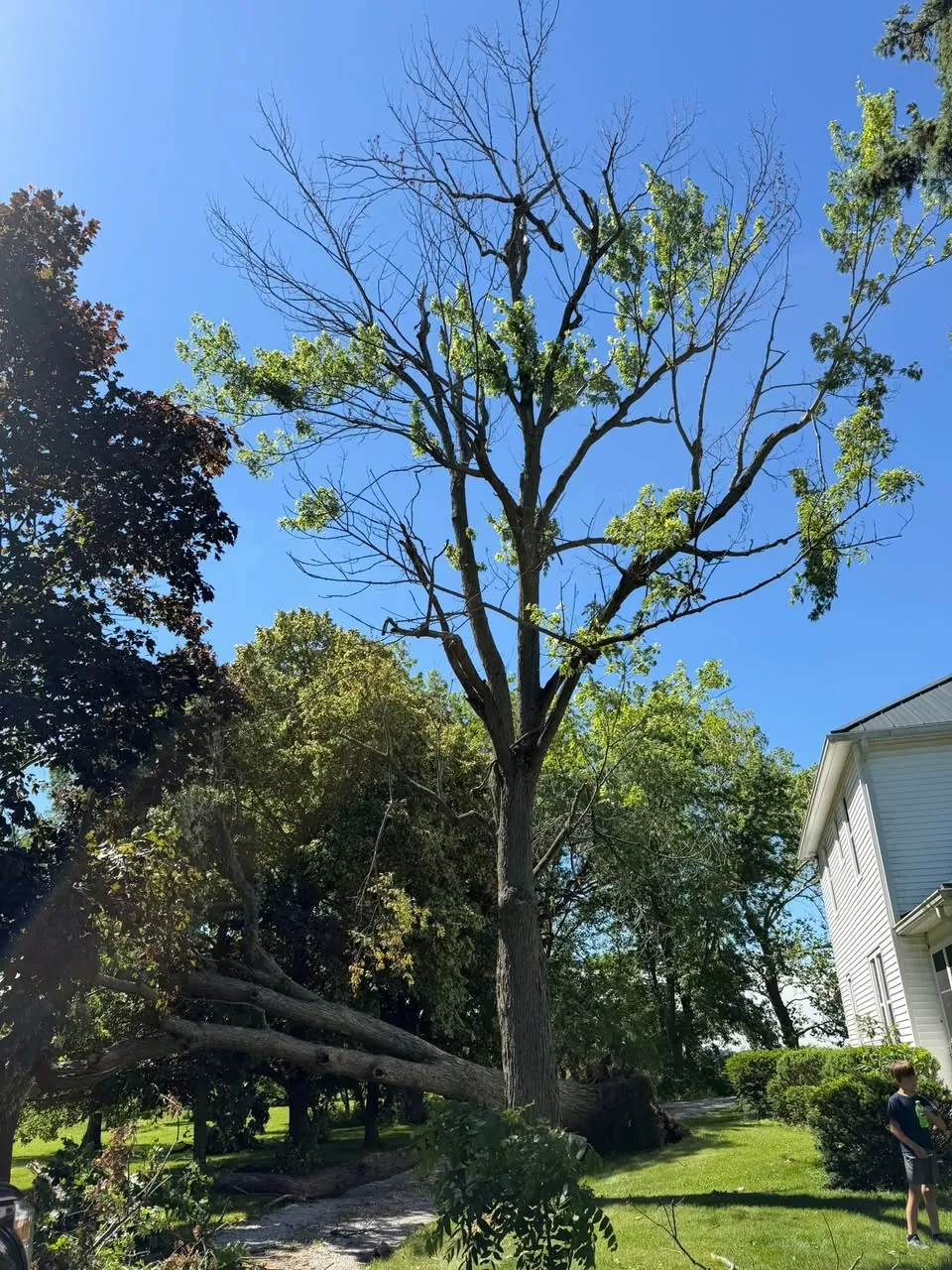
- Dieback in the crown: bare branches at the top or ends of limbs.
- Thin or off-color leaves compared to similar trees nearby.
- Fungus such as mushrooms or shelf conks on the trunk or roots.
- Cracks in the trunk or at major forks.
- Bark falling off or loose bark with bare wood beneath.
- A new lean or soil heaving at the base.
- Holes and woodpecker damage that point to insects.
What to do next
| Sign | Urgency |
|---|---|
| New lean with lifted soil | Call right away |
| Large crack | Soon |
| Fungus at the base | Have it checked |
| Thin leaves | Monitor and assess |
Keeping trees healthy
- Avoid piling mulch against the trunk.
- Protect roots from construction and heavy equipment.
- Water young trees during dry spells.
- Prune properly and avoid topping.
Need it fixed?
Tree Health Assessment across Erie County
A local Erie crew for removals, trimming, stumps and storm work, with phones answered around the clock.
Frequently asked questions
Can a dying tree be saved?
Sometimes, if the cause is found early. Advanced decay or heavy dieback usually means removal.
Why are only some branches dying?
It can be insects, disease, root damage or old injuries. A closer look helps pin it down.
Is a hollow tree dangerous?
It depends on how much sound wood remains. Large cavities near the base are a concern.
Are mushrooms on the lawn a problem?
Not usually. Mushrooms growing on or right at the base of a tree are the ones to watch.