 Tree Service Erie PA crew
Lake-effect snow is often wet and heavy, and ice storms coat every twig. That weight finds the weak spots: dead limbs, tight forks and long, heavy branches.
Here's what to check before the first big storm.
What to look at in the fall
- Deadwood: dead branches break first.
- Weak forks: V-shaped unions with bark pinched between stems.
- Long, heavy limbs over the roof or driveway.
- Dense crowns that hold more snow.
What can be done
| Problem | Fix |
|---|---|
| Dead branches | Deadwood removal |
| Heavy limb over roof | Reduction cut |
| Weak fork | Cabling or bracing |
| Dense crown | Crown thinning |
During a storm
- Don't shake snow off branches above your head.
- Stay out from under loaded trees.
- Gently brush snow off small shrubs from below if needed.
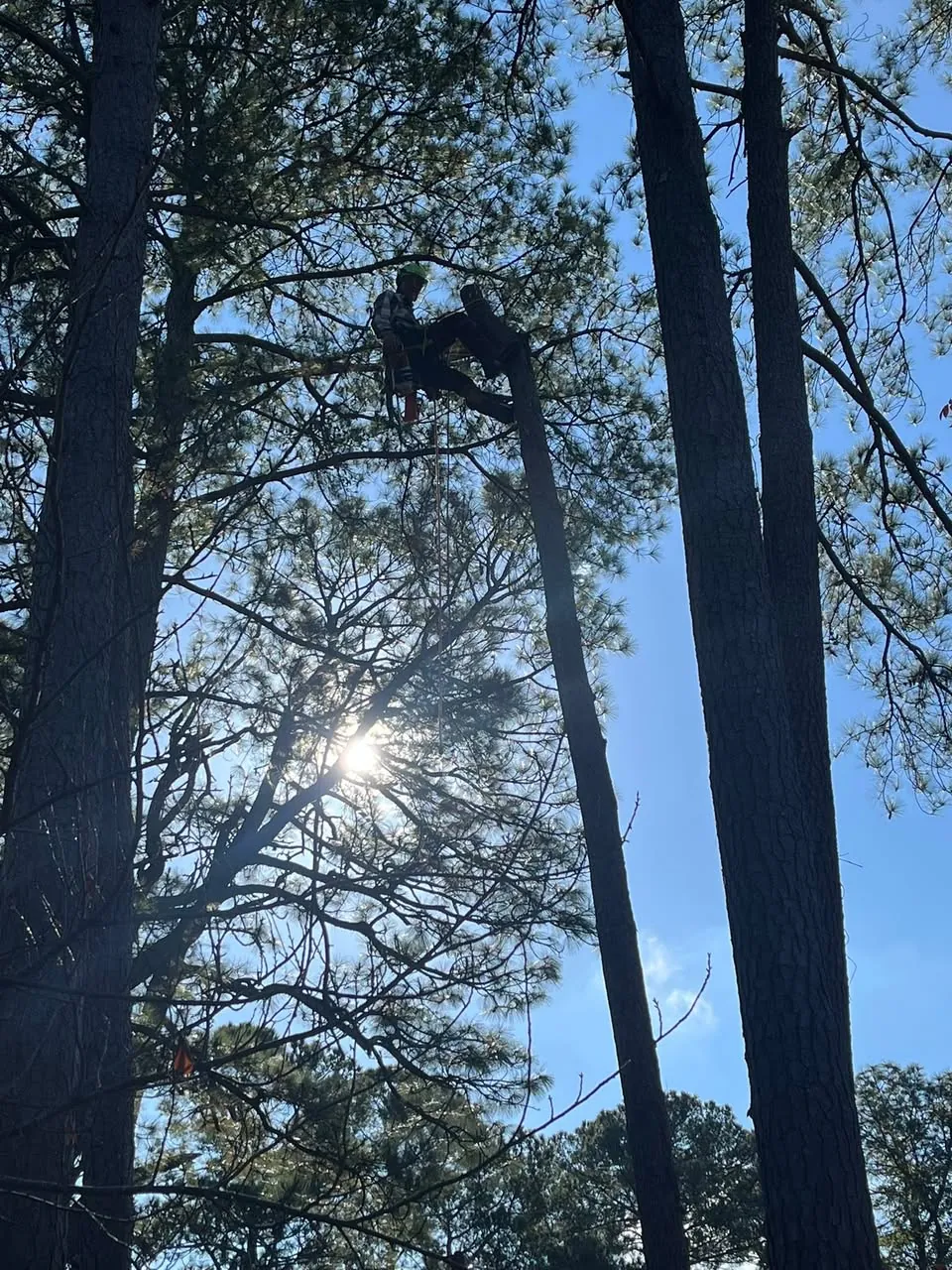
After the storm, look up before walking under trees. Broken limbs can be caught in the canopy.
After the storm
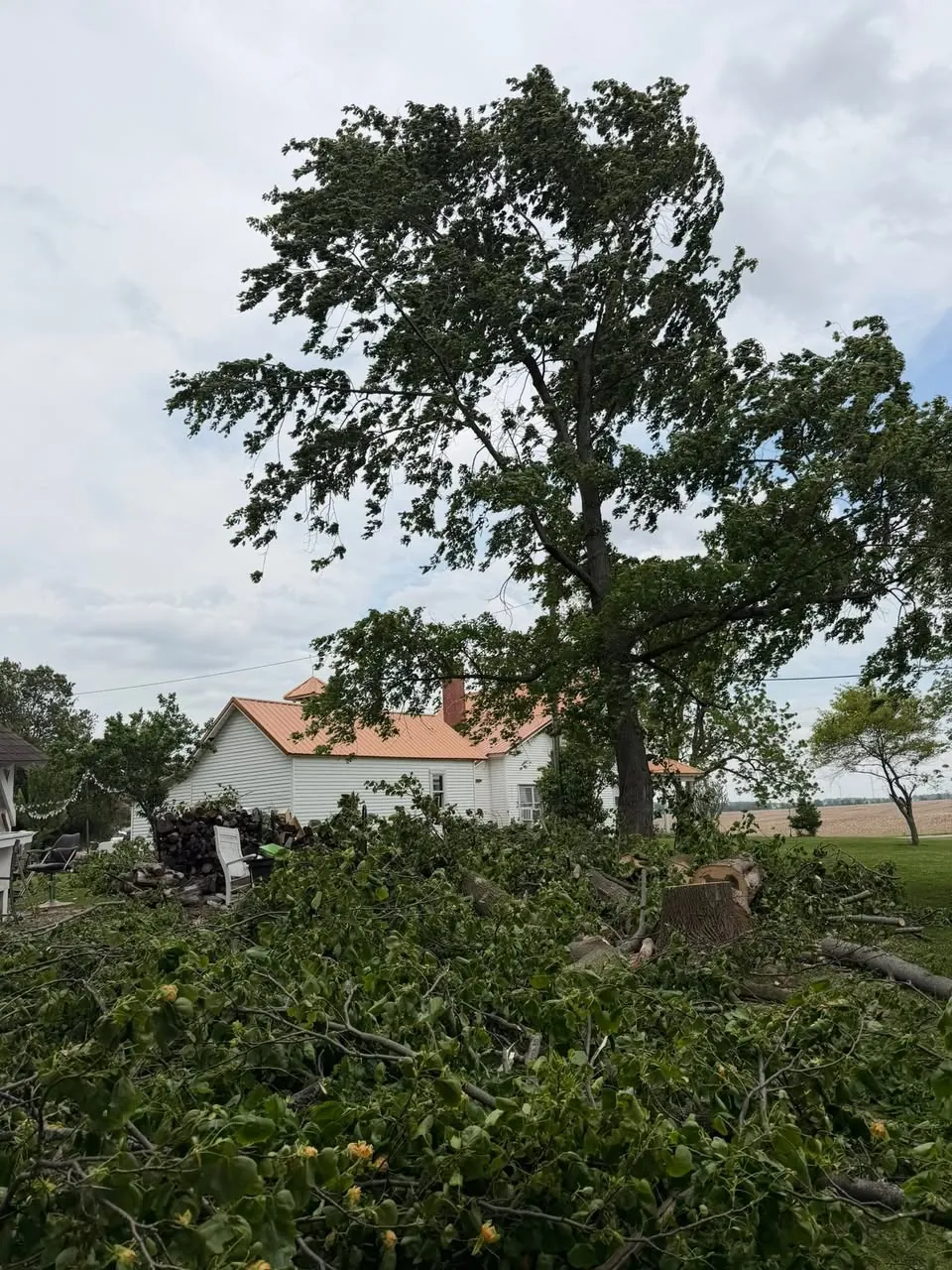
Walk the yard and look for broken branches, cracks and new leans. Anything hanging or cracked near the house should be dealt with right away.
Need it fixed?
Storm Damage Cleanup across Erie County
A local Erie crew for removals, trimming, stumps and storm work, with phones answered around the clock.
Frequently asked questions
Which trees break most in ice storms?
Fast-growing, weak-wooded trees like silver maple, Bradford pear and willow tend to break more often.
Should I wrap my trees for winter?
Wrapping can protect small evergreens from snow damage. It isn't practical for large trees.
Is it too late to prune in winter?
No. Dormant-season pruning is fine and often ideal, as long as conditions are safe.
Can a bent birch recover after ice?
Young, flexible trees sometimes straighten. Larger trees bent to the ground often don't fully recover.